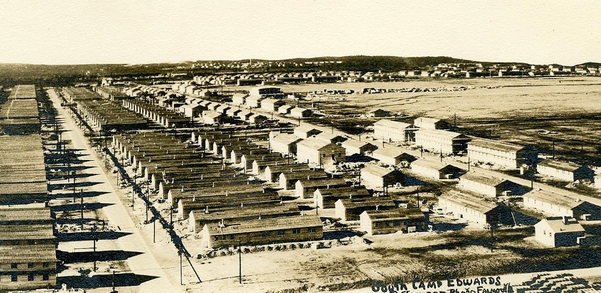
Camp Edwards Amphibious Training Center
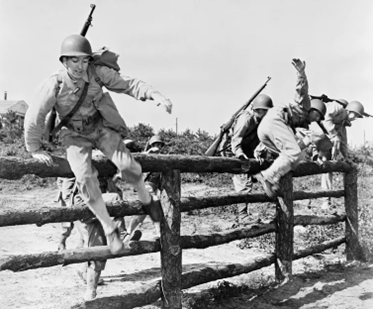
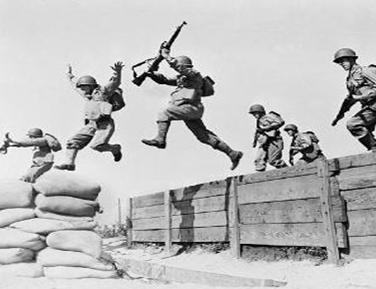
The United States military recognized the critical and immediate need to train troops in the most difficult of military operations: an amphibious assault on a hostile shore. The Army needed a training center to teach regular infantry their role in this mission. This training center was to instruct specialty troops in boat handling, beach clearing, the landing of supplies, creating beach exits, and the evacuation of wounded and P.O.W.s
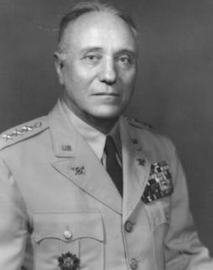
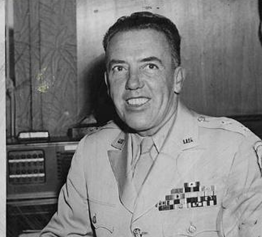
The Army ordered newly promoted General Frank Keating, Chief of Staff of the 2nd Division, to draw up plans for several amphibious training centers. The first of these training centers was to be located at Camp Edwards. This Cape Cod base was selected because it was close to the water, had navigable beaches, accessible islands, could host an entire Army division, and had accessible railroad lines. Its only drawback was the unpredictable New England weather. Camp Edwards could not offer year-round training and was to be used as a stopgap site until Camp Carrabelle (renamed Camp Gordon Johnson) in Florida could be constructed.
General Keating had only weeks to create training materials, work out new ideas for amphibious maneuvers, and assemble supplies and equipment. The physical and combat portion of the training would take place at the Camp Edwards base. The shore-to-shore training would be held at various camps along Cape Cod’s coastline. Combat teams would be rotated between Camp Edwards and Washburn Island located in Waquoit Bay.[1]
General Keating appointed Colonel Daniel Noce to be the first commander of the Engineer Amphibian Command. He was promoted to Brigadier General, and his new assignment quickly expanded to include the responsibility for recruiting men with specialized water and boating skills. He then received an additional assignment that included training a large number of soldiers and assisting in the development of new types of equipment.
General Noce and his staff reached out to experienced Coast Guard, Navy, and Marine officers to train soldiers on attacking from the water. To quickly staff up on non-military personnel, they created an ad campaign to attract men who were skilled in working with boats, especially in difficult coastal waters.[2]
The advertisements were run in newspapers and printed in pamphlets that announced jobs for a “Water Taxi Service.” This marketing campaign was highly successful in attracting boat builders, pilots, lobstermen, blacksmiths, longshoremen, and college yachtsmen.[3]
Troops Present in Several Towns and Villages
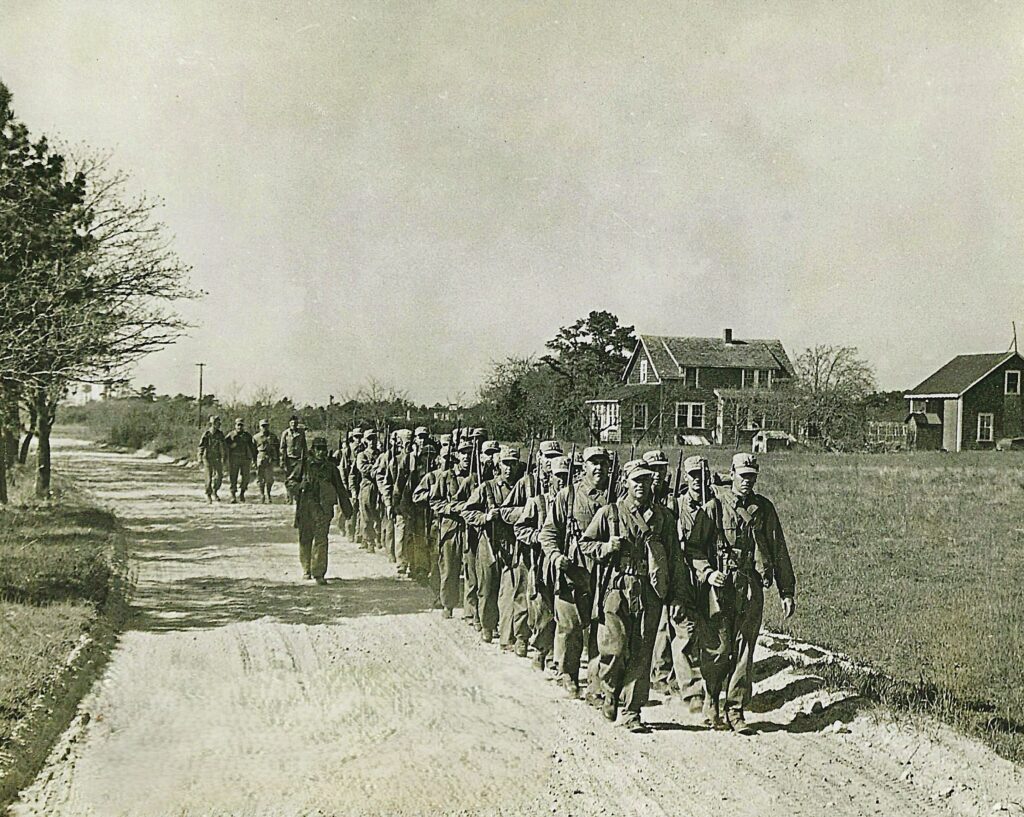
Between 1942 and 1944 military units occupied several local villages and towns for specific tasks. Troops present at Scranton Avenue, Falmouth set up a maintenance and an experimental modification center.
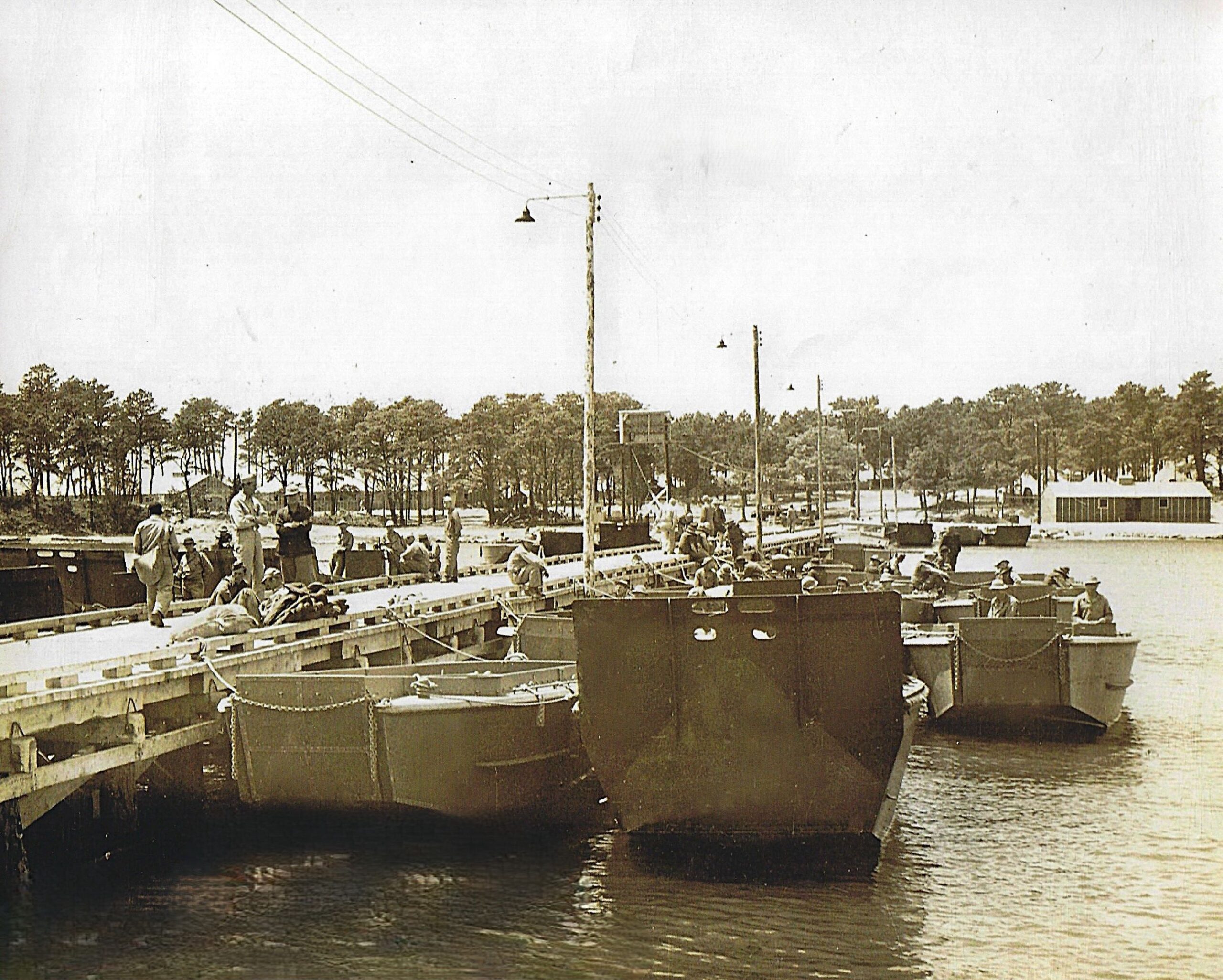
In Cotuit, nicknamed Camp “Candoit,” the village became the home of the 2nd Engineer Special Brigade, which taught new techniques in amphibious attacks. [4]
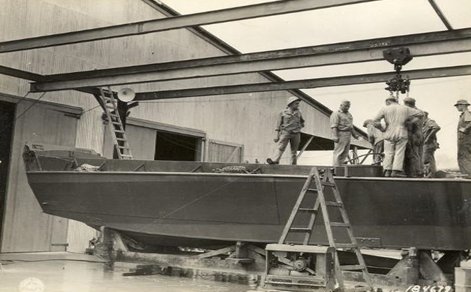
In Osterville Village, nicknamed Camp “Havedoit,” the 562nd Engineer Boat Maintenance Battalion set up camp in the Crosby Boatyards. Major John Wells, the commander of this unit, remarked that “the Crosby Boats had some of the best boat mechanics in the United States, and they were able to come up with innovative ways to keep boats running even when parts were not available.”[5]
Washburn Island
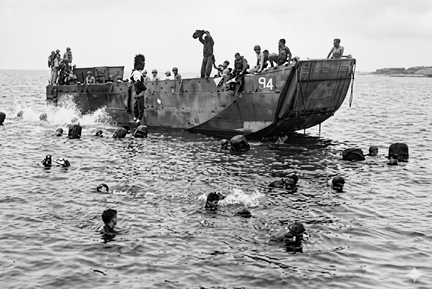
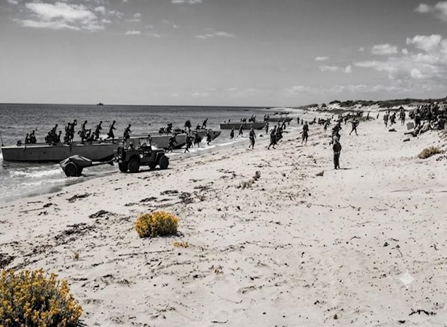
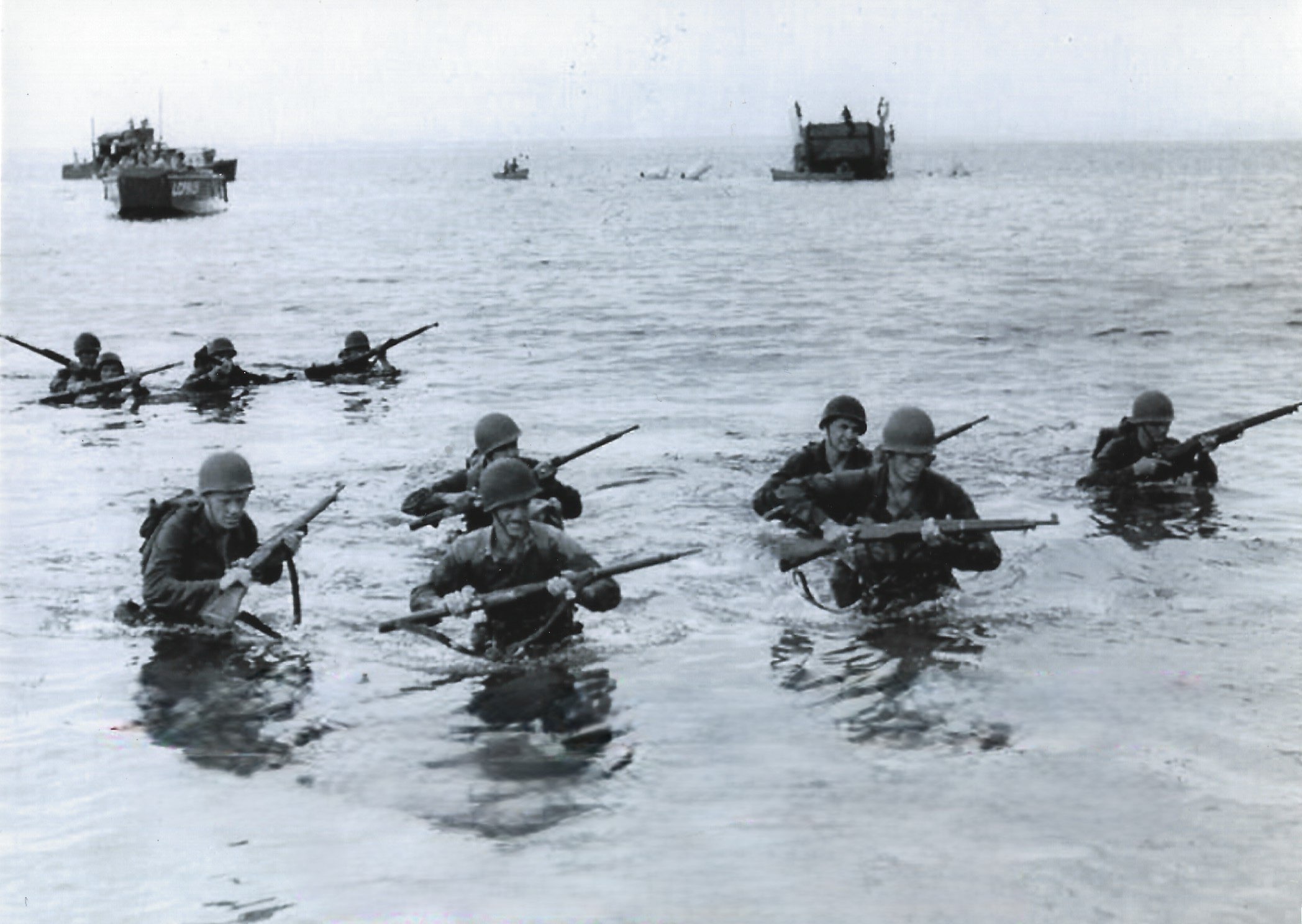
This 275-acre island, now part of the Waquoit Bay National Estuarine Research Reserve, became the training and practice ground for amphibious assault teams. Troops practiced utilizing landing craft to deploy on hostile beaches, maneuvering day and night for almost two years.
Seasoned British commandos were brought in to teach “hand-to-hand combat and self-defense, and to practice specific commando raiding tactics.” [6]
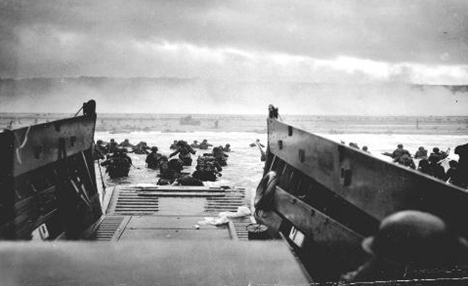
The troops who trained on Washburn Island were deployed to and fought on the beaches of Normandy, North Africa, and a Japanese-held island in the Pacific.[7]
Martha’s Vineyard
The final part of the training was to be a large-scale invasion of Martha’s Vineyard. The mock battle, referred to as “Martha’s Vineyard Maneuvers,” would last several days and attempted to be as realistic and reasonably safe as possible. [8]
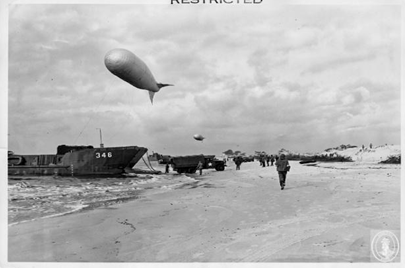
The beaches of Martha’s Vineyard were covered with barbed wire and obstacles, and explosives were buried to simulate gunfire. Chemical units would lay down smoke screens while paratroopers attempted to capture Katima Airfield. Flour bombs were used by the approaching airplanes and the island defenders to add yet another layer of realism to the practice assaults.
At another part of the island, landing craft would deliver thousands of troops to the beaches including troops from the 36th Division and a battalion of rangers. Once on land, they would storm through the forests and then simulate destroying enemy installations.
Arrangements were made for high ranking Army and Navy officers to attend and observe as boats and men engaged in landings along the shoreline. These realistic practice attacks were deemed a success and used to prepare troops for the landing on Normandy Beach on D-Day.[9]
Although the amphibious training was a military secret, residents would often see soldiers from the 2nd Engineer Special Brigade riding in unusual types of boats and landing craft. Newsreels showed British commandos doing hit and run raids in Europe. Over time, the locals began to call the U.S. troops “Cape Cod Commandos,” and the nickname stuck with this brigade throughout the war. Their battle cry: “We hit but don’t run.”[10]
Specialized Landing Equipment
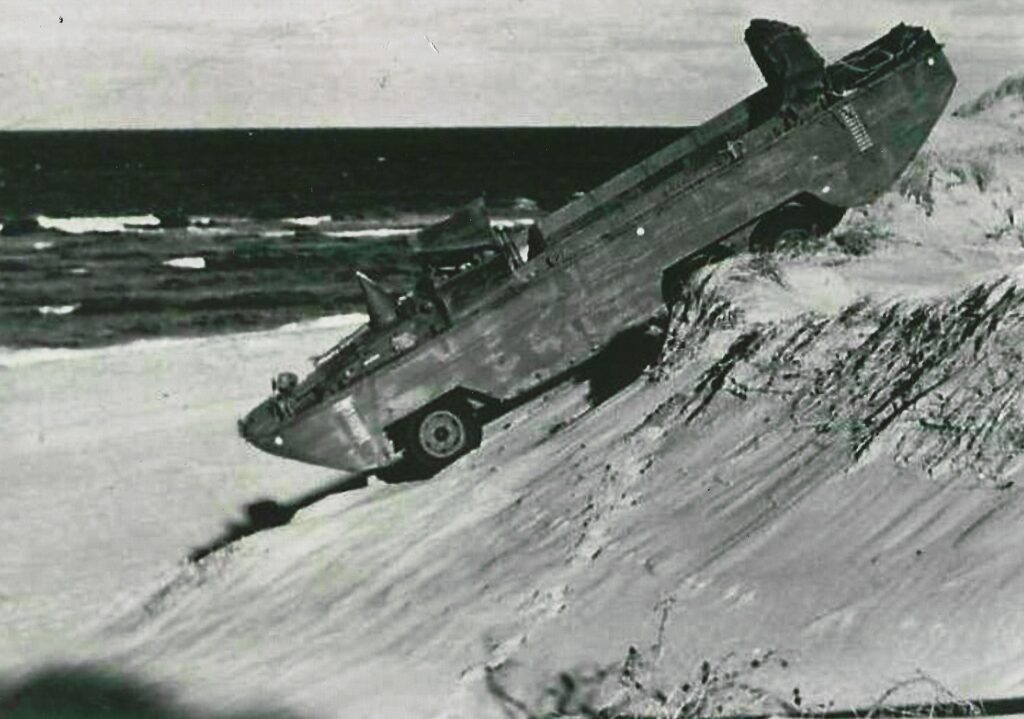
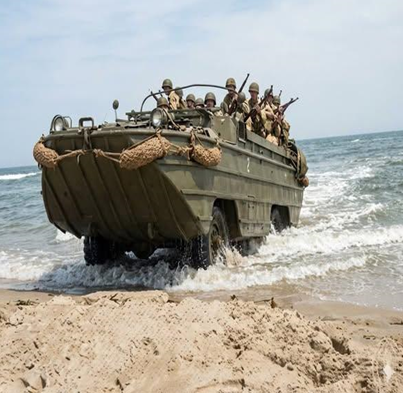
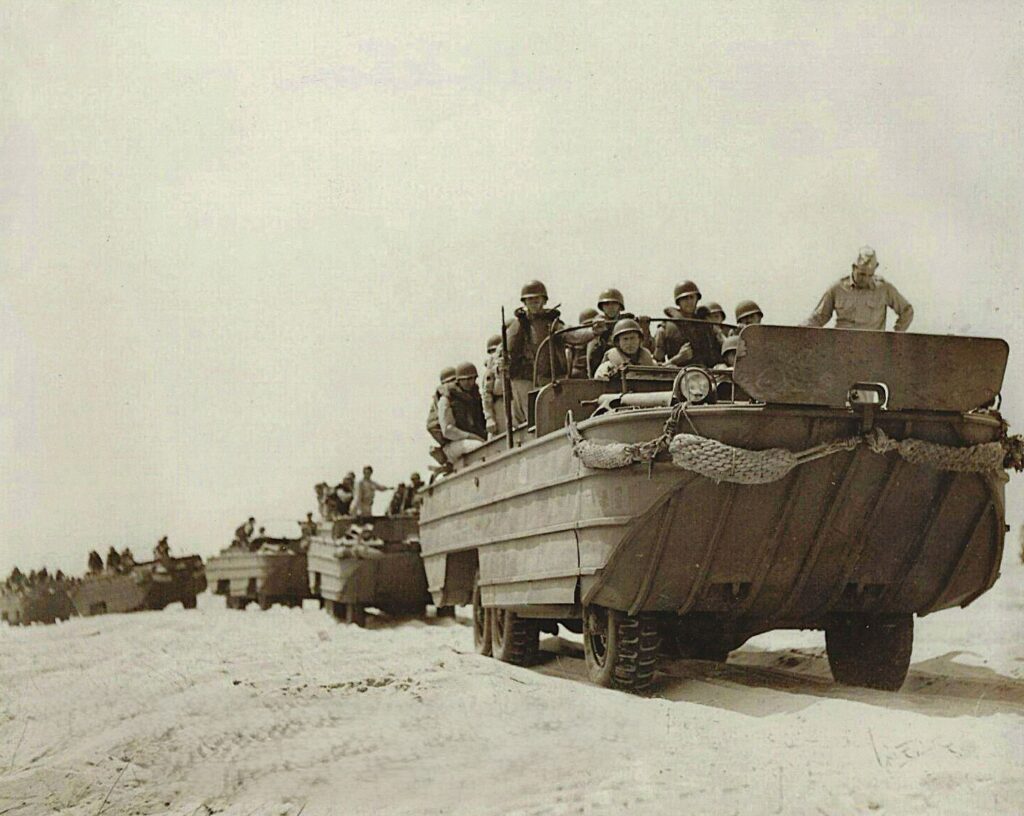
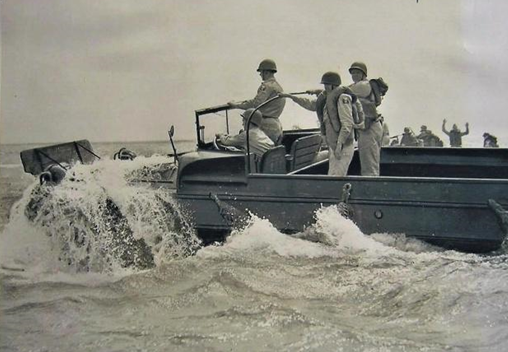
An important part of the success of the amphibious training was the specialized equipment developed for the shore-to-shore landings. The DUKW or “Duck” was a 6-wheel drive truck that could go from land, to water, to land. Designed by General Motors, it could hold 24 soldiers or transport 5,000 pounds of cargo. These vehicles were first field tested at Camp Edwards. The “Duck Boats” proved so successful that over 21,000 were built and were used in the battles to take Japanese-held Pacific islands, in the invasion of Sicily, and for the landings on D-Day.
Andrew Higgins, a New Orleans boat builder, designed a shallow-draft vehicle that could be used in water and on land. These Landing Craft, Vehicle, Personnel, called LCVPs for short, had a bow ramp that allowed troops to exit quickly. The hull was made of wood, the ramps made of metal, and an armor plate could be attached to the sides. It could carry 36 troops or a motorized vehicle. The LCVPs became a crucial vehicle for landing on beaches. These vehicles were also armed with two 30-caliber machine guns.
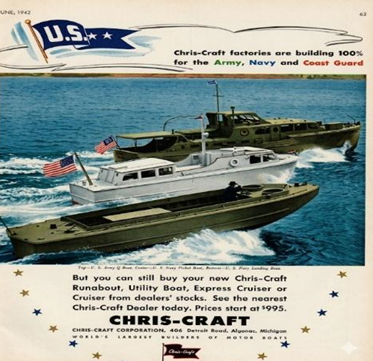
Other boat manufacturers, including Chris-Craft Boats, a commercial boat builder, were granted permission from Higgins to begin manufacturing the LCPLs. [11].
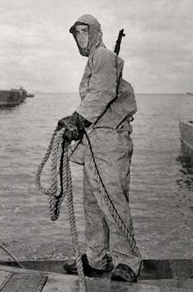
Many other companies and manufacturers built specialized equipment to get supplies and troops from shore to shore. Some of the equipment was given nicknames. Armored tractors were called “Alligators.” There were specialized boats designed to recover damaged vessels nicknamed “Handy Willies and Handy Jimmies.” [12] For soldiers who would be in the water directing landing vehicles, special protective clothing was designed known as “ZOOT Suits”.
A Pill for Seasickness
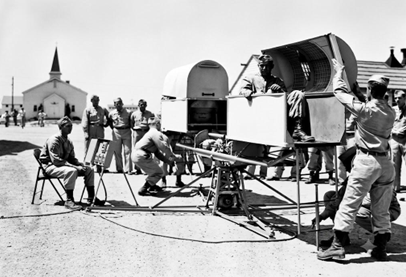
An important concern for soldiers riding in rough coastal waters was seasickness. General Noce wanted a remedy that would not create side effects on soldiers. First, a motion sickness machine was developed that would mimic rolling and tossing waves. Then a range of drugs was tested on soldiers inside the motion sickness machine. The 36th and 45th Infantry were the main test subjects. After a series of trials, a pill was developed that did indeed prevent seasickness. [13]
Camp Edwards, the towns along the Cape Cod coastline, and the nearby islands provided the Army and Navy with a proof of concept on the best ways for the United States military to successfully attack enemy islands and coastlines.
However, because the weather on Cape Cod was too cold and unpredictable in the winter months to successfully train the troops in water combat exercises, the U.S. Army made the decision to relocate the amphibious training center and its units to Camp Carrabelle, Florida.
Notes
1. Becker, Marshall, The Amphibious Training Center Study No. 22, History of the Army Ground Forces 1946, public release in 1985
https://apps.dtic.mil/sti/tr/pdf/ADA954909.pdf
2. Cann, John, Galluzzo, John, Camp Edwards and the Otis Air Force Base, 2010, Arcadia Publishing]
3. Kelly, Martha Hall. “How Martha’s Vineyard Prepared Soldiers for Normandy”, June 7, 2025.
https://marthahallkelly.com/blog/general/how-marthas-vineyard-prepared-soldiers-for-normandy/
4. Chapter –“Early Days on Cape Cod” History of the 2nd Engineer Special Brigade 2esb.org 2008
https://2esb.org/04_History/Book/Chapter_01.htm
5. Cann, John, Galluzzo, John, Camp Edwards and the Otis Air Force Base 2010, Arcadia Publishing
6. Chapter –“Early Days on Cape Cod” History of the 2nd Engineer Special Brigade 2esb.org 2008
https://2esb.org/04_History/Book/Chapter_01.htm
7. Brisco, Charles, “Special Forces Training- Commando & Ranger Training” , Veritas Vol 10,No.1 2014
https://arsof-history.org/articles/v10n1_commando_rangers_training_page_1.html
8. Learning, John, “Practice Ground”, Cape Cod Times, June 6, 2004, updated Jan 6 2011
https://www.capecodtimes.com/story/news/2004/06/06/practice-ground/50926310007/
9. Dresser, Tom, “From Martha’s Vineyard to D-Day, 70 years “ MV Times June 5, 2014
10. Murphy, Jackson,” The Historical Perspective: The Invasion of Martha’s Vineyard, The Martha’s Vineyard Times, November 26, 2013,
https://www.mvtimes.com/2013/11/26/historical-perspective-invasion-marthas-vineyard-
11. History of the 2nd Engineer Brigade, 2ESB.org Engineer Special Brigade.org2ESB.org
https://2esb.org/04_History/Book/Chapter_01.htm#:~:text=THE%202d%20Engineer%20Special%20Brigade,“Commandos%20hit%20and%20run.
12. DeLeew, Cy, “Chris-Craft Supports Efforts During the WWII”, Michigan Technological University, October 16, 2016
https://ss.sites.mtu.edu/mhugl/2016/10/16/chris-craft-builder-of-luxury-boats-supports-efforts-during-ww-ii/
13. Cann, John, Galluzzo, John, Camp Edwards and the Otis Air Force Base, 2010, Arcadia Publishing
Related Articles
Archive 1